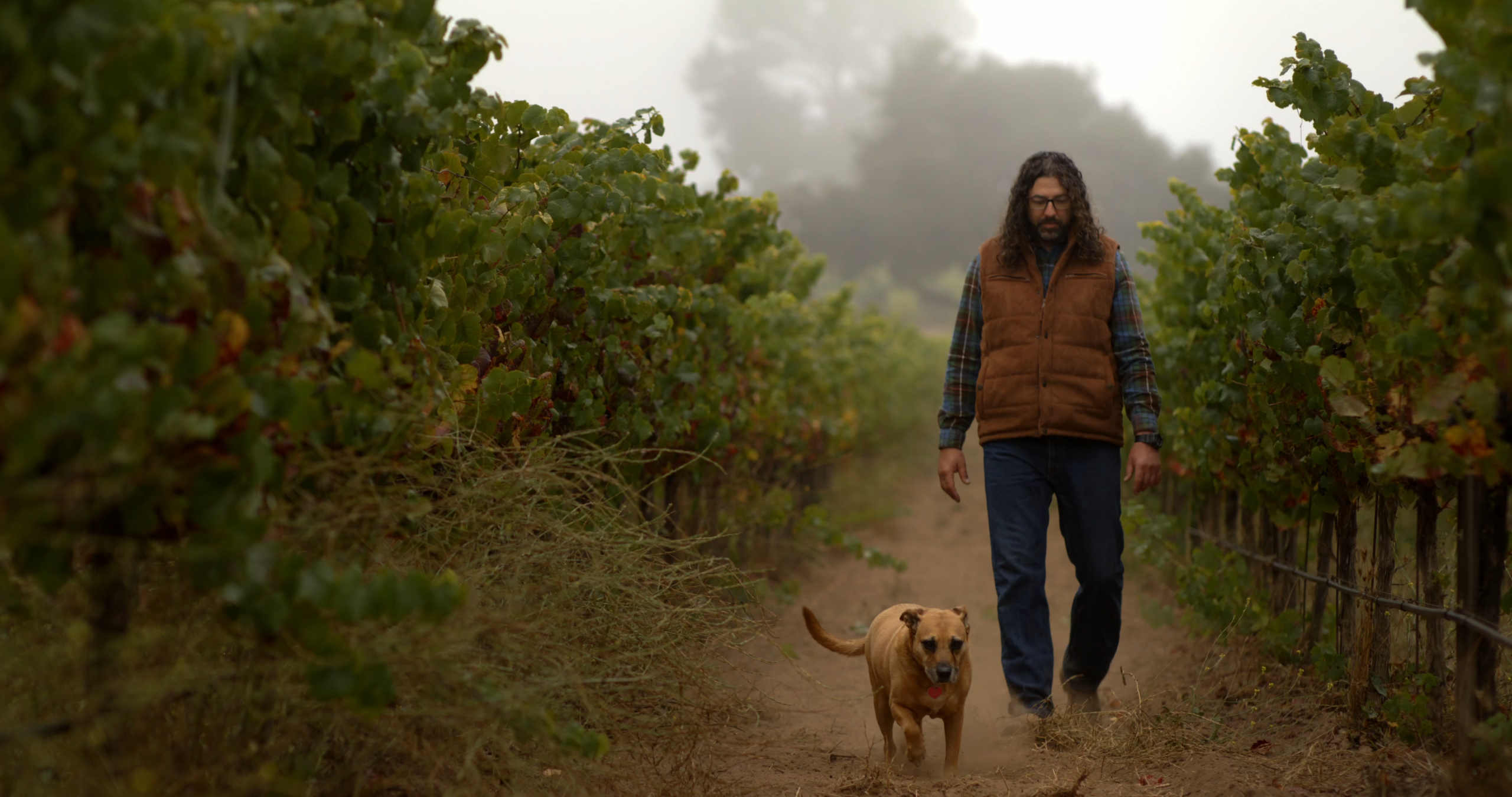
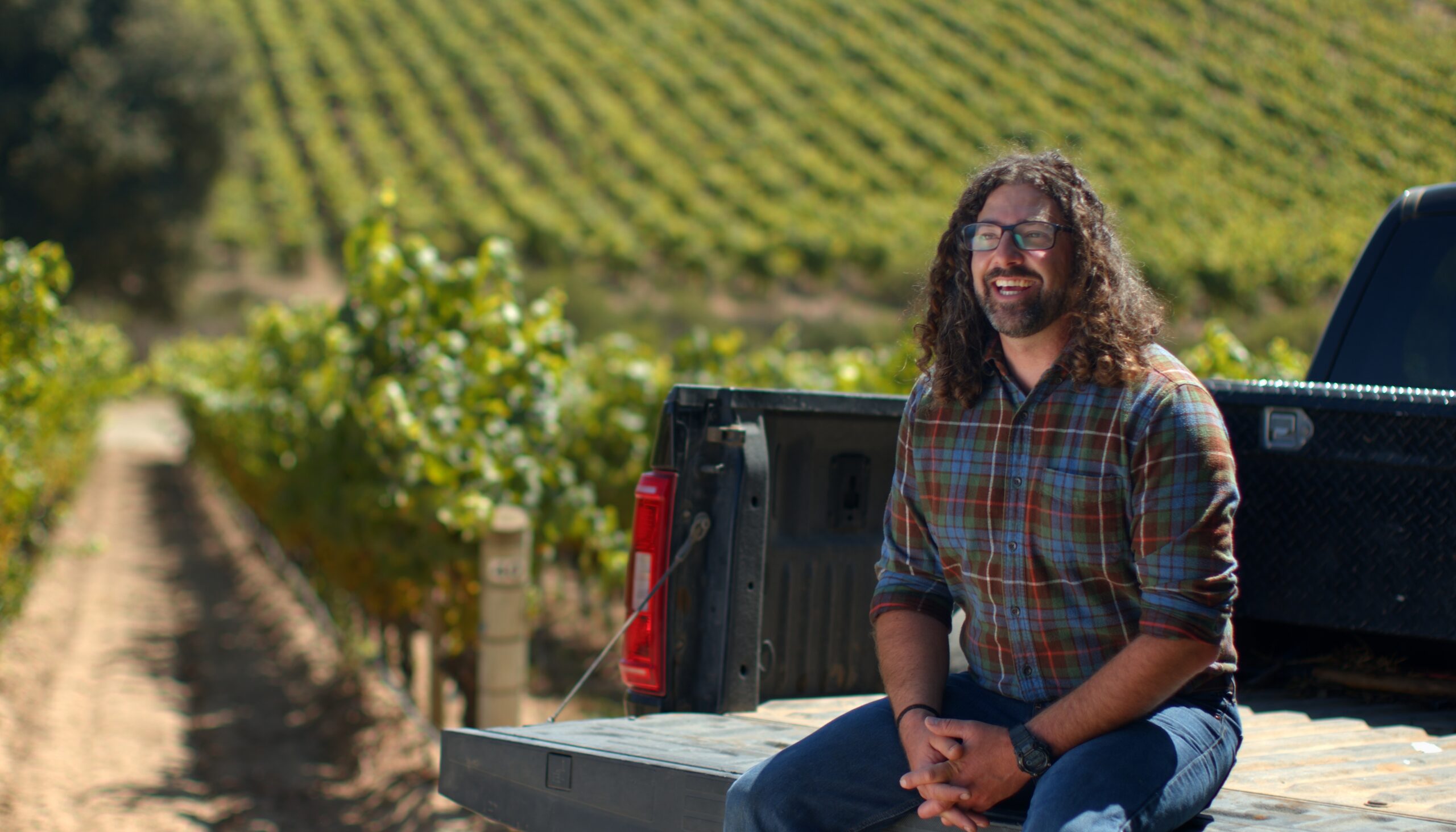
Meet Andrew Heilbrun, Director of Viticulture and Farming
Goats, pigs, Pinot Noir, oh my!
Q&A: Andrew Heilbrun
Andrew has farmed the Presqu’ile estate since 2018, and today he looks after everything that grows here, from the vines to the truffles, pigs, protea, goats, avocados, oh my!
Where did you learn to farm?
I grew up in Nebraska, visiting the family farm and friends’ farms among the corn, cows, and wheat, and my dad gave me my work ethic. After that I spent more than nine years at J. Lohr Vineyards and Wines, where I learned vineyards from the ground up. My main mentor there was Steve Carter, who ran vineyard operations. Once I was in Santa Barbara County, I was lucky to work for two years alongside Jeff Newton, who founded Coastal Vineyard Care.
What brought you to Presqu’ile?
Presqu’ile changed management companies at the beginning of 2018, right when I started as a vineyard manager at Coastal Vineyard Care. It was one of my first clients and I fell in love with it right away. I came from a strong estate program in Paso Robles, so being part of one here felt grounding. The diversity and the vision for the vineyard and the brand are what grabbed me.
What does a typical day look like?
There are always activities on the list based on the season, but the day-to-day schedule rarely goes as planned.
Why plant other crops around a vineyard?
A vineyard is a monoculture, and in a monoculture big pieces of the ecosystem can get weak or go missing. That imbalance can affect the health of the vineyard and eventually the quality of the wine. So we add other crops around the vines, along with grazing animals and insectary wildflower rows, and we’ve removed all herbicides.
What does sustainability mean to you?
Sustainability equals longevity. Part of what makes farming great is that it can last through the ages and become a multigenerational link. The culture of the team is a huge part of that. It’s a family, and we’re part of the ecosystem too.
“Sustainability equals longevity. Part of what makes farming great is that it can last through the ages and become a multigenerational link. The culture of the team is a huge part of that. It’s a family, and we’re part of the ecosystem too.”
Favorite variety to farm?
That’s hard to narrow down, since I’ve farmed more than 50. Right now it’s Syrah and Pinot Noir. Syrah is one of the most straightforward to grow, and I think you could grow it on the moon and the wine would still represent where it came from. Pinot Noir takes more finesse and effort, a true labor of love, which makes that first sip more satisfying.
What excites you about the new Sta. Rita Hills vineyard?
It’s one of those projects you may only get to do once in a career. All the boxes are checked, from the location to the terroir to the varieties and beyond.
Favorite season?
Harvest, even though it’s one of the hardest. It’s when you reap the rewards of a whole season of hard work.